Showing posts with label Liverpool. Show all posts

Friday, May 17, 2013

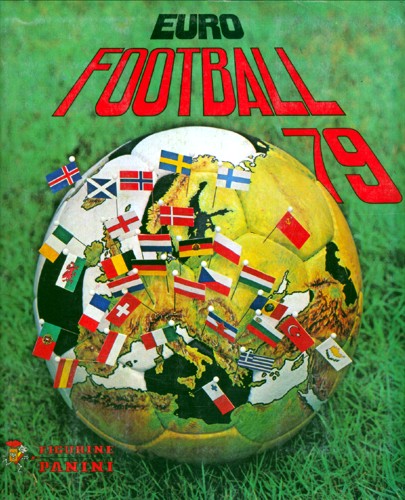
Panini: Euro Football 79

My failing memory doesn't recall Panini's Euro Football 79 being on sale in the UK when I was a kid. If that's the case, it's an almighty shame because this, for me, was one of the best Panini sticker collections ever made.

It's not just the variety and quality of the stickers inside the album that elevate it to such a celebrated plain, but the simplicity and logic of its structure. In basic terms, the album was split into three parts, one for each of the European club competitions that existed back then. Within each of those parts were five sub-sections containing a Roll of Honour, pictures from the previous season's Final, the fixtures for the upcoming season (1978/79), the teams involved in them and the players to look out for. Nothing more, nothing less... and it was all the better for it.

Sadly there were no shiny foil stickers in this collection, but there were special trophy stickers to obtain, and these belonged on each of the three Roll of Honour pages. Though the white background lacked that unique glittery pizazz seen in other collections, the trophy stickers were still a smart way of heading up the lists of the previous Finals.

The 'Trophy' pages

Looking at the 'European Cup' section, we're first treated to a three-page pictorial review of the 1977/78 Final at Wembley between Liverpool and Club Brugge. Here it seems Panini's designers really allowed themselves the indulgence of creating a mini photo album. Thirteen pictures showing The Reds' victorious night were there to be formed from one, two or four stickers in what must be the most ambitious attempt at creating a set-piece display Panini had ever made up to that point. And there was one of these photo journals for each of the three European Finals in the album.

European Cup Final 1977/78

European Cup-Winners' Cup
Winners, Anderlecht
Similarly, each of the three sections had a fixture chart that the young sticker collector could fill in whenever a round of matches was played. A simple layout featuring a four-part picture of the current holders at the top of the page ensured an attractive item that kids would return to time and again.

But if it was team pictures that the album's owner was really after, they weren't to be disappointed. A comprehensive selection of all the teams taking part in Europe's top competitions in 1978/79 provided a whole raft of images to collect, and again they were available as one-, two- or four-part pictures.


European Cup teams: Real Madrid, Rangers, et al.

And what wonderful pictures they are. The colours really come shining through and the players you find yourself spotting - some of them stars from the World Cup - provide a great deal of pleasure throughout.

European Cup-Winners' Cup teams: Ipswich, Barcelona et al.

Similarly we get ample opportunity to marvel at the wide range of competing teams from across Europe, many of whom were so obscure that you wouldn't have even heard of them as a pre-teen football fan back then. To actually discover teams from as far afield as Czechoslovakia, Luxembourg and Bulgaria was therefore a revelation and one not generally derived from Panini's domestic sticker collections.

UEFA Cup teams: Athletic Bilbao, Nantes et al.

Euro Football 79 also drilled down to player level too, and here we get to see pages with a more familiar look and feel. Head shots of 120 footballers across all three European competitions were featured throughout the album, and again a wide range of countries and clubs made the overall piece more interesting.

European Cup players

In the European Cup section, Liverpool feature prominently through four players (Emlyn Hughes, Kenny Dalglish, Ray Clemence and Graeme Souness) as do Juventus, but there are familiar faces on show throughout including Uli Stielike, Rene Van De Kerkhof and Nottingham Forest's Tony Woodcock.

European Cup-Winners' Cup players

The Cup-Winners' Cup section had more masters of Total Football in the shape of Anderlecht's Ron Rensenbrink and Arie Haan and Barcelona's Johan Neeskens. A pre-breakthrough Michel Platini could also be found along with the twin Ipswich talents of Mick Mills and Paul Mariner.

UEFA Cup players

As for the UEFA Cup, here's where we get the greatest combination of world stars and common Football League luminaries. Rubbing shoulders with Mario Kempes (Valencia), Paolo Rossi (Vicenza) and Ruud Krol (Ajax) you'll just as easily find Bob Latchford (Everton), Mick Channon (Man City) and Cyrille Regis (West Bromwich Albion). The UEFA Cup was surely a very strange battlefield back in 1978...

Frankly I could go on forever talking about the charm of this sticker album, but I won't - even though I haven't yet mentioned the delightful squiggly pen-and-ink illustrations on many of the pages. Instead I'll wrap up by saying that when this sticker album appears in complete form on eBay, you can expect to pay somewhere in the region of £100 for it, and rightly so in my opinion. As a snapshot of European football as it was back in the late-1970s, it's a real thing of beauty and certainly a joy forever.

Friday, March 1, 2013

Subbuteo Team Collections - Andrew Rockall

We received an email from Andrew Rockall (Statto_74) yesterday, showing us his recently discovered collection of Subbuteo teams. We're very happy to showcase them here as it's damn impressive! Over to Andrew for the background...

Twenty years ago I made a conscious decision to save my Subbuteo things for any future children I might have. I came across the box of goodies last week and thought it was time to dust it down and take a nostalgic look.

I was amazed to find I still have 33 teams. As you can see from the kit designs, I made almost all of my purchases during the 80's. What surprised me were several teams I know I had but have somehow mislaid.

My brother and I used to play for hours and fought for nearly as long. We had a traditional cloth pitch for several years but our Dad made a plywood base with wooden sides which we covered in adverts from papers and magazines. He also pinned an Astropitch to that and painted the base for extra realism. I was distraught to discover he broke this up in 2000 whilst I was in Australia.

We also had the 5-a-side pitch that we got in a jumble sale (an indoor boot sale, for any kids out there!) which was great fun, especially at the time of year when Soccer Six was broadcast from Manchester's GMex.

I do now have a son. He's only 10 months old at present so I will be packing these bits away for another 4 to 5 years, but I cannot wait for then. My biggest fear is him saying "Dad I'd rather play FIFA 18..."

No son, no!

Click on the image for the full size version... it's worth it!

Back Row: England, Netherlands, Denmark, Honduras, Wales, Brazil, Northern Ireland, Ireland Away, Wales, Germany, Scotland, England (I had 2 teams numbered 1-22)

Middle Row: Wimbledon, Norwich, Ajax, Manchester City, Everton, Manchester United, Leeds United, Ipswich Town, Oxford United, West Ham United, Chelsea

Front Row: Arsenal Away, Birmingham City, Chelsea, Watford, Juventus, Liverpool, Tottenham Hotspur, Nottingham Forest, Celtic

Many thanks to Andrew for allowing us to share this. If you'd like to share your nostalgia memories with us, why not get in touch? Just drop us a line to admin [at] thefootballattic [dot] com and we'll do the rest!

Sunday, January 20, 2013

The News of the World Football Annual 1983/84

The arrival of the 1983/84 season prompted many to wonder how far football had fallen in recent times. The game had lost its allure and was in something of a tailspin but The News of the World Football Annual, through its anecdotal ponderings, acknowledged this for the ages and tried to offer some cause for hope at the start of a landmark campaign.

The season began with a new name for an old competition. The Football League was now known as the Canon League. According to the Annual, an announcement was made on May 5 1983 that a deal had been struck with the Japanese camera and business equipment maker to the tune of £3.2 million, lasting three years.


If that figure seems paltry compared to today’s big money deals, consider this. When shared out, Canon’s money ensured every First Division club would benefit by just £10,000 each. Considering Watford’s Luther Blissett had moved from Watford to AC Milan for £1 million during the summer of ’83, it really didn't seem like much at all. True, more money was distributed for the high achievers in the League, but even then the First Division champions would only get an additional £50,000. Even the winners of the Milk Cup could expect £64,000.

Fortunately, clubs could finally rely on a greater source of income from the new TV deal that had been thrashed out between the Football League (sorry – Canon League) and the two main broadcasters, BBC and ITV. Under the terms of the new agreement, ten live games would now be shown every season. Match of the Day would show five on Friday nights, while the other five would appear on The Big Match on Sunday afternoons. No club would appear in a live match more than once, although the usual weekend highlights would continue in their regular form on both channels.

According to the News of the World Football Annual 1983/84, the new TV deal wasn’t the fait accompli it may have at first seemed. The League were reluctant to allow live games to be shown for fear that it would discourage people from attending matches in person, while the broadcasters were hesitant about showing team shirts with sponsors logos on them. In the end a compromise was reached ensuring this would be the first season where shirt advertising was seen on our screens.

Elsewhere, further changes were being made to the game. For the first time in 1983/84, the Milk Cup Final would be played on a Sunday, and to ensure the pitch was in good condition (and provide an all-round facelift), a new 20-year £4 million contract had been signed by the FA and Wembley Stadium Ltd in May 1983.

Yet such talk of contracts and high finance masked the growing malaise creeping into the international game. In England, attendances for domestic games had plummeted by 1.24 million in the past year reaching their lowest total since the Second World War. Even across Europe, only eight countries had seen an increase in the number of fans passing through the turnstiles (Scotland being one, curiously).

International matches were suffering too. Within the pages of the Annual it’s noted that the British Championship match between England and Wales at Wembley in February 1983 saw the lowest attendance ever for an England match – just 24,000 paying to see a starting XI featuring such talent as Alan Devonshire, Derek Statham and Gary Mabbutt.


As for success on the pitch, things were little better as English clubs were finding their run of dominance in Europe seemingly at an end. The previous season had seen holders Aston Villa knocked out in the quarter finals of the European Cup by Juventus along with English champions Liverpool, beaten on aggregate by Polish side Widzew Lodz.

In the other competitions, the misery continued. In the Cup-Winners’ Cup, Tottenham had been eliminated by Bayern Munich in the Second Round while Arsenal, Ipswich, Manchester United and Southampton all fell at the first hurdle in the UEFA Cup. Perhaps the English clubs could turn to Scotland for inspiration what with Aberdeen winning the European Cup Winners Cup and Dundee United unexpectedly reaching the UEFA Cup quarter finals.

The times were certainly ‘a-changing according to the News of the World Football Annual 1983/84, not least because Liverpool, the biggest club in the country, were about to begin a new era under the managerial leadership of Joe Fagan. The 1982/83 campaign had ended with Bob Paisley retiring from the game after a nine-season run in which The Reds had picked up 20 major trophies. They were now faced with the task of trying to maintain their unprecedented success by once again promoting from within the Anfield boot room. No-one could be sure Fagan would be able to do so, but a look back at Paisley’s roll of honour would provide his team with ample inspiration for the coming season.

If Liverpool had one quality above all others it was the ability to score goals, yet amid a period of uncertainty and negativity, it was pleasing at least to be reminded of one final statistic from the 384-page pocket annual. The 1982/83 season had provided the highest number of goals across all four English divisions for 15 years, and which team stumped up with the most goals of all the 92 teams? Why Wimbledon, of course. The Division Four champions scored 96 in total - nine more than Liverpool.

Saturday, January 12, 2013

Football kits 'The Talbot Way'

The Coventry 'Talbot' kit
If you listened in to our recent podcast on retro football kit design, you'd have heard Rich and myself yakking on about the famous Coventry City 'Talbot' kit (see pic right). For those that still aren't aware, this was a special kit brought in between 1981 and 1983 to capture the spirit of Coventry City's new-found partnership with the Talbot motor group. At one time the club were even planning to rename themselves Coventry Talbot, but that's another story.

Sadly for Coventry, not even their fancy new kit got to see the light of day as often as they'd have liked. On those rare occasions when the BBC or ITV outside broadcast trucks rolled into Highfield Road, the cameras were never allowed to cast their gaze upon the big 'T', the Football League banning such obvious sponsorship from appearing on our screens.

But what if such bold, blatant sponsorship on football shirts been encouraged back then rather than frowned upon? What would football kits have looked like in the seasons that followed?

This is a question we asked ourselves during Episode 3 of The Football Attic Podcast and I'm pleased to say we're now able to provide some visual answers (of sorts).

To begin, however, one needs to understand why the Coventry 'Talbot' kit looked so good. In a nutshell, the 'T' from Talbot's circular logo fitted the shape of a football kit brilliantly. That very fact explains, perhaps, why the 'all-over' logo approach never caught on - because few company logos are tall or T-shaped. On the plus side, however, car brands like Talbot tend to have the sort of dynamic logos that can look good on a football shirt (or shorts).

Click for larger version
So how about this for a selection of car-related kits? (see left)

Here I've used a standard kit template to show Ipswich Town with Volkswagen sponsorship (2), Arsenal with Renault (3), Tottenham with Mercedes (4) and Liverpool with Citroen (5).

On the basis of my previous point about tall or T-shaped logos, Arsenal's kit should be the best of this bunch as Renault's diamond is the only one of the four that fits this category. Sadly, the complex, somewhat fussy nature of the French company's logo of the time doesn't lend itself too well to the shirt and shorts, in my view.

Of the others, Volkswagen's roundel looks clean and unambiguous, but looks a bit like someone's stuck an Art Deco plate down the front of Terry Butcher's pants. As for the Mercedes three-pointed star, I felt it best to remove the outer circle, but sadly even this doesn't improve a somewhat awkward fit.

Instead, it's Citroen's double chevron which steals the show, probably because it looks like the kind of stylish device one would see on a kit in the modern era (albeit a rather large version of one). Hardly any modification was needed on this design, except for a slight drop-shadow to accentuate the upturned V's. Pretty good, but compared to the Talbot kit, maybe still lacking in overall impact?

Click for larger version
Having exhausted all inspiration on car company logos, I thought I'd turn my attention to petrol companies next. Two logos had potential in my view - BP and Esso.

As you can see from the graphic on the right, there was only ever going to be one team that could wear the yellow and green shield with real gutso, and that was Norwich City (6). I think you'll agree it looks pretty good, even if it does turn The Canaries' shirt almost completely green.

Less successful was my attempt to put Esso's oval symbol on Everton's blue shirt (7). I thought the light blue of the oval and the darker blue of the background might work nicely as a subtle contrast, but for some reason it just didn't. As for the red text, that didn't stand out much either.

Click for larger version
All that was left was to try one more throw of the dice, and this time it came in the form of a logo that was square originally but made horizontal in order to create more of a visual stimulus. I chose the Kodak 'K' device and stretched both ends so it became a broad red band on Watford's home shirt.

The effect isn't entirely bad, and even vaguely reminiscent of the home shirt Watford wore between 1985 and 1988. The trouble is, it doesn't fill the entire strip like Talbot's big T did way back at the start of the 1980s.

And therein lies the problem. Maybe all this time we've been thinking it was a prudish attitude towards commercialisation that stopped more Talbot kits materialising, when actually it was the inappropriateness of the logos available.

It only leaves me with an increased sense of admiration for that smart designer who took one look at the Talbot logo and sensed in an instant that it could dominate the team strip in a unique and memorable way. Had it been the Renault logo, however, we might never have seen the design classic we know today.

Friday, December 7, 2012

Greatest Shirt Sponsor Ever - Round 4


Yes it's Round 4 - The Round of 16 - of The Greatest Shirt Sponsor Ever!

Round 3 finished yesterday (Thursday) and as usual the results can be viewed here. Coventry finally bowed out to frankly more deserving sponsors, but the greatest shock of the round was Sharp, stalwart of Man U for 12 years, being ousted by QPR's Guinness. Honestly, is this the point we've reached? ;-)

Anyway, this is where it gets really interesting with the final 16 sponsors battling it out. Hitachi may have gone, but Crown Paints and Candy still fly the red flag, but the legendary CP faces seriously stiff competition in the form of Wang...stiff..Wang...is anybody actually reading this anyway?

Once again, our thanks and gratitude go out to John Devlin for kindly allowing us to use his fantastic illustrations. John's work can be found at the True Colours site and he is also on Twitter so pay him a visit and give him a follow.


Rules:

1) You are voting for the SPONSOR, not the team that it adorned.

2) Voting for Round 2 closes at 23:59 on Tuesday 11th December (ignore what I said on twitter)

3) This is a bit of fun... if you don't like the results, take a deep breath, smile and accept that democracy is flawed... ;-)

NB Again, the polls will no longer show the results after you've voted. Results will only be revealed at the end of the round.

Let's get it on!


Sunday, December 2, 2012

Greatest Shirt Sponsor Ever - Round 3


We've reached Round 3 - The Round of 16 - of The Greatest Shirt Sponsor Ever!

Round 2 ended on Friday and the results can be viewed here. And what a set of results they are! Hitachi defeated by Avco, Panasonic losing out to TDK and the biggest travesty of all, Granada Bingo losing to Blackburn's McEwans!!! ;-)

So with the first lot of seeded casualties, the remaining 32 sponsors now fight it out amongst themselves.

Once again, our thanks and gratitude go out to John Devlin for kindly allowing us to use his fantastic illustrations. John's work can be found at the True Colours site and he is also on Twitter so pay him a visit and give him a follow.


Rules:

1) You are voting for the SPONSOR, not the team that it adorned.

2) Voting for Round 2 closes at 23:59 on Thursday 6th December

3) This is a bit of fun... if you don't like the results, take a deep breath, smile and accept that democracy is flawed... ;-)


NB From this point on, the polls will no longer show the results after you've voted. Results will be revealed at the end of the round.

Let battle commence!


Sunday, November 25, 2012

Greatest Shirt Sponsor Ever - Round 2


It's time for Round 2 of The Greatest Shirt Sponsor Ever!

Round 1 ended on Friday and the results can be viewed here.

But now it's time for the big guns to enter the fray as the 32 seeded sponsors join the tournament!  At last, Crown Paints, Wang, Sharp, etc, get to flex their sponsorship muscles!

Not only that, but as you'll see, the sponsors themselves have been granted a makeover courtesy of John Devlin, author of football kit bible True Colours.

Our sincere thanks and gratitude go out to John for not only kindly allowing us to use his fantastic illustrations, but also for working so quickly to get the images to us. John's work can be found at the True Colours site and he is also on Twitter so pay him a visit and give him a follow.

Rules:

1) You are voting for the SPONSOR, not the team that it adorned.

2) Voting for Round 2 closes at midnight on Friday 30th November

3) This is a bit of fun... if you don't like the results, take a deep breath, smile and accept that democracy is flawed... ;-)

Let battle commence!


Friday, November 23, 2012

Match of the Day - Episode 1 (1964)

The first edition of the BBC’s Match of the Day programme was aired on 22 August 1964. Shown on BBC2, it was the first time people in the UK (albeit only in London at first) were able to watch football highlights on their own TV screens.

Despite initial fears that it might lead to fewer people going along to watch matches in person, it went on to become an institution of British broadcasting and a go-to programme for British football fans everywhere.

Though today’s Match of the Day is a showcase for slick presentation, superior camerawork and great commentary, the first outing for the show was notably lacking in gloss. To begin, there was no theme tune, no opening title sequence and, this being 1964, everything was in black and white. What you’d have seen was a picture board showing the programme’s title, over which a continuity announcer spoke the following words:

“And now we come to ‘Match of the Day’, the highlights of one of today’s Football League matches. Your commentators are Kenneth Wolstenholme and Wally Barnes.”

What happened after that?  Read on to find out....

1. Introduction

The camera cuts straight to the film footage of Liverpool v Arsenal (complete with barely readable caption) where the home side run out onto the pitch to a noisy but cheerful welcome from the crowd. The first thing to note is Liverpool wearing white shorts, such was the case back then. Bill Shankly would eventually have his side wearing all red because he felt a kit of one colour gave an altogether stronger image to the opposing team. Someone somewhere has probably done research into whether a one-colour kit brings greater success, but now’s not the time to discuss it.

2. Kenneth Wolstenholme

Our first sight of Kenneth Wolstenholme, commentator supreme and still two years away from his iconic performance at the 1966 World Cup Final. In the background we hear the Anfield crowd singing along in unison to 'She Loves You' and Wolstenholme gives us his opening gambit:

“Welcome to Match of the Day, the first of a weekly series coming to you every Saturday on BBC2. As you can hear we’re in Beatleville for this Liverpool versus Arsenal match.”

3. Liverpool

A caption shows us the Liverpool team line-up. Remember, Liverpool were the reigning league champions at the time but two of their number were missing here - Ian St. John with appendicitis and Alf Arrowsmith with a leg injury. Oh for the days when footballers were called ‘Alf’...

4. Arsenal

And so to the Arsenal team which, Wolstenholme tells us, could be heading for glory in the eyes of many people - especially with new signing Don Howe, the former England right back, in their ranks.

5. Wally Barnes

Wolstenholme is joined pitchside by former Arsenal full back Wally Barnes. To a backing tannoy accompaniment of ‘Hippy Hippy Shake’ by The Swinging Blue Jeans, Barnes explains that the absence of Liverpool’s two strikers due to illness could be an unsettling factor for the defending champions.

6. Kick-off

Liverpool kick off, playing from right to left and wearing the grey shirts. Roger Hunt is ready and poised (see top of picture) and with the blow of the whistle from Mr Howley of Middlesbrough, the 1964/65 season gets underway.

7. Early chaos

Chaos ensues as, after a bright start, Ian Callaghan is fouled near the Arsenal goal, but no-one hears the referee’s whistle amid the Anfield din. Arsenal counter-attack and even when the Liverpool keeper Tommy Lawrence gets to throw the ball back upfield for the free kick, Arsenal defender Billy McCulloch intercepts the ball and tries a shot. “None of this matters” exclaims Wolsteholme, but luckily George Eastham figures it all out and brings the game to a temporary halt.

8. Early chance

Despite an opening seven minutes in which both sides have had their fair share of attacking play, it’s Arsenal that get the first decent chance of the game. A free kick taken by George Eastham from just outside the far corner of the penalty area arrows towards Lawrence’s right-hand post, but the Liverpool keeper dives low to smother the ball.

9. Liverpool open the scoring

GOAL! Liverpool’s oft-used ploy of crossing balls into the Arsenal box from the left wing finally pays dividends as Roger Hunt hooks an Ian Calaghan pull-back over the keeper and into the net. “It’s a goal!” shouts Wolstenholme, and who are we to disagree - 1-0 to Liverpool.

10. Caption issues

Note for future reference - make sure captions are positioned correctly so that any ‘1’s aren’t obscured by the half-way line.

11. Half Time

The referee blows for half time. Liverpool have played the better football and edged the possession, but both sides have had their chances. Don Howe’s certainly seen plenty of the ball in the Arsenal defence and is proving a useful close-season buy from West Brom.

12. Wally's First Half summary


Wally Barnes appears on-screen again to give us his verdict of the first half. He feels Liverpool have dominated the first half (perhaps a bit harsh) and correctly highlights the home side’s strength down the left wing which, coincidentally, is where Arsenal are at their weakest. His explanation is spoken to the musical accompaniment of Ken Dodd singing ‘Happiness’ over the Anfield tannoy system.

13. Second Half

Arsenal kick off, playing from right to left in a kit of white shirts, white socks and red socks. Nike - take note. Purple and black simply will not do.

14. Liverpool double their lead

GOAL!  Liverpool go 2-0 up... Ian Callaghan’s cross finds Gordon Wallace who heads in from close range. Once again, no action replay to watch so if you wanted to see the goal again, you’d need either a photographic memory or both teams randomly re-enacting the goal for you.

15. Arsenal back in the game

GOAL! Arsenal pull one back thanks to Geoff Strong who plays a neat one-two with Eastham before unleashing a low shot past the beaten Lawrence. A rare lapse in concentration for what had been a strong Liverpool defence, but still a goal generously applauded goal by the home fans.

16. Arsenal equalise

GOAL! LIVERPOOL 2 ARSENAL 2... Strong plays the ball down the right wing where it’s picked up by Armstrong. He crosses for Baker whose brilliantly angled diving header beats Lawrence again on his left post. It’s two goals in two minutes for The Gunners and they’re right back in it.

17. Lucky omen... but for who?

Another swift flowing move almost results in Armstrong putting Arsenal in front, but Kenneth Wolstenholme has other things on his mind. “A black cat is running on the far side... there it is! A black cat... I wonder which side it supports? Arsenal or Liverpool?” The poor distressed animal runs almost an entire circuit of the pitch, even evading a fan who dives onto the pitch to try and catch it. A reminder to anyone younger than 15: this was an era when animals were regularly seen making random appearances in the middle of top-flight football matches. Nowadays you’ll be lucky if you see so much as a beach ball.

16 Liverpool's late winner

GOAL! Despite being under the cosh from a series of constant Arsenal attacks in the second half, it’s Liverpool who grab the winner in the dying seconds of the match. Receiving a cross-field pass from Ian Callaghan, Gordon Wallace cuts in from the left wing and from yards out lets rip with a storming shot that leaves Furnell floundering. It’s his second and Liverpool’s third.

17. Final whistle

Arsenal throw everything into one last desperate attack but it comes to nought as the referee blows his whistle to end the game. Wolstenholme quickly reappears on-screen, puffing out his cheeks at the exciting climax to a great game. “Well I call it the Match of the Century, I don’t know about the Match of the Day!” he says and, wrong though he probably is, who are we to deny the great man his moment of elation.

Before the end, KW just has time to bring us the other results involving clubs from London. Crystal Palace had “a bad start to Division Two” losing 3-2 at home to Derby, while Fulham lost 2-1 at home to West Ham, “but then one London club had to lose then” explains Wolstenholme helpfully.

18. Closing titles

With that, Kenneth Wolstenholme invites us to watch Match of the Day again next week and we finally get some Newsreel-style music by way of a closing theme.

Nearly 50 years on, it’s fair to say the presentation couldn’t be any more different to that which we know today, but at least the football itself remains the central focus of the programme. While that’s the case, we’ll always look to Match of the Day for our weekly fix of football escapism.

Friday, October 12, 2012

Great Tracksuits of Our Time: No. 2

Liverpool (1977):


Once again we witness the seamster's art in all its glory as Bob Paisley's FA Cup finalists of 1977 wear their name proudly on the back of their tracksuit tops. The garment itself is beautifully styled by Umbro with a striped collar, cuffs and waist band, a style that Umbro resurrected for England's 2012/13 anthem jackets [retch]. On the front (see Emlyn Hughes above), we see a big Umbro diamond opposite a Liverpool FC badge with commemorative 'FA Cup Final 1977' stitching below. On the reverse... well it has to be some shouty letters spelling out your club name, doesn't it? It was never any other way back in the 70's, and so much the better for it.

Seen any fine examples of retro tracksuit design? Tell us all about them by dropping us a line to admin [at] thefootballattic [dot] com.

Saturday, June 9, 2012

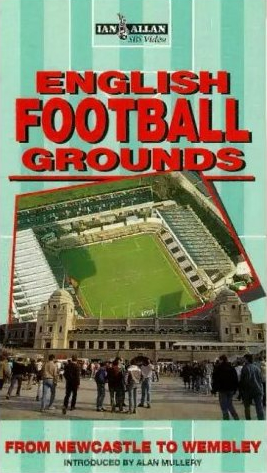
English Football Grounds VHS - Part 1

I have a confession to make... I have an obsession with stadiums. I blame it all on the San Siro and Italia 90. It’s my issue and I’ve come to peace with it. It does, however, mean I have several rather nerdy items in my football collection. The truly awesome Football Grounds of Europe by Simon Inglis, several volumes of Football Grounds from the Air... and this video...


The film opens with a shot of an empty Molineux stand and through the magic of cross fading, the ground slowly fills up, noise level rising as it does. Finally, the players run out on to the pitch to a cacophony of cheers. This then fades to black and some truly awful late 70s synth soundtrack kicks in... welcome to the world of low budget videos people!

The titles then inform us that the video is introduced by the legend that is Alan Mullery.

Never mind the quality, feel the...er...Mullery?

And then he appears. Eloquent, fluid, erudite, mellifluous... these are all words that describe the polar opposite of Mr. Mullery’s presenting style...and I use the word ‘presenting’ in its loosest possible sense. The best way I can describe Alan’s segues is you get the creeping sense that he’s been taken hostage by a terrorist group and with gun to head, is being forced to read out his plea to the Prime Minister, only for someone to have replaced the carefully prepared script at the last minute with some stuff about football league grounds... His eyes darting left to right as he struggles to muster any real enthusiasm for the words he’s supposedly written, there are clear signs of torture... though it’s us who is suffering, toes curling to extremes.

“In the next 70 minutes (oh lord!) or so, we aim to show you the huge changes that have taken place in the last few years...”

Just read that quote again then remember this was filmed in 1994. Now think of the state of most grounds in 2012 and you get the feeling Alan’s brain would have melted...though based on this video, I think it was almost there.

Thankfully, we soon get to the meat of the video and, with the hint dropped that we’re off to the ‘far north’, what feast of the senses are we treated to? Which huge ground do we get sight of to cease our pavlovian salivating?

This...


OK...

“So where are we off to first Dave?” enquires a disembodied female voice.
“Izzup to the norfeast to sint jamezzzzez park”, comes the answer.
Despite the shaky production values and obviously limited budget, it’s at this point that the video really does come into its own.  This is the first glimpse you get of St James’ Park...

I can see it!!!

This is less than 20 years ago, but the place is hardly recognisable.

The quirkiness then continues where the team decide to include the scene where they announce that “the first thing they should do is go to reception and get permission to go into the ground”. There’s detail and there’s DETAIL!

Once ensconced within, the changes that have taken place “in the last few years” are detailed. This was at a time when St James’ Park was halfway through its first major rebuilding phase, with the 2 ends being transformed from terracing to steep banked seating with their deep covered roofs. At this stage, only one of those ends had been completed; the other was still a low, open terrace and there’s still terracing in the main stand. The commentary makes the point that ‘fans familiar with the ground just a few years ago, wouldn’t recognise it today’ and, following a camera sweep around it, it’s hard to see anyone from the present recognising that particular incarnation of the ground.  Also of note, there’s not a single Sports Direct logo anywhere, though there is a Northern rock hoarding.

It’s also interesting to note that Keegan was so popular at the time, he even drew a crowd waiting for a bus...

Gimme Shelter...
We then move onto Middlesbrough, accompanied by some cod Wurlitzer style tunes...lovely! So...what did the Riverside look like in 1994? This...

Not actual size
Of course,  it wasn’t yet built for the ‘Boro still played at Ayresome Park in 1994. With no hint of irony given how soon they were to abandon the place, the narrator tells us that this is a place steeped in history. Hmmm...
History smells funny...
Without warning, Alan pops up again to deliver a stunning anecdote about playing Brian Clough for the first time...and by stunning, I mean deathly. I have a suspicion that Steve Coogan has this video in his collection somewhere. Needles to say, he had the last laugh.

So where are we off to next on this odyssey from Newcastle to Wembley?  Why, York City of course!

After the now obligatory ground pan, we’re treated to some footage of York against Colchester from the 1992/3 season for no apparent reason, other than maybe to show what a game looks like if you film it from behind a support column.

Mmmm... Posty...

One exciting anecdote from Alan later and we’re off to yet another ground that no longer exists... a beautifully snow covered Leeds Road in Huddersfield. While progress is a natural thing in life and most of these grounds were archaic even in the 90s, it is rather saddening to see so much that is now housing developments and supermarkets. Yes the grounds that replaced these decrepit old homes have better seating, views and facilities, but they also look so damn similar! The true joy of this video is the sheer variety of stands and terraces you get, often all within one ground. These places told a story. You could often see the history of a club just by looking from left to right.

At least what was to be known initially as the McAlpine Stadium was a rather unique looking thing in itself and can be seen here mid-construction.

At this point it was known as the McAlp
Here’s Alan again... Shankly, Dennis Law, 6 goals, Frank Worthington, Trevor Cherry all get a mention and I’ll cut him some slack here... he’s clearly speaking from memory rather than a cue card and a genuine sparkle is detectable as he tells us how none of them ever got a result there.

It’s Ewood Park now and here we have yet another ground in the middle of being built. This was of course the time when Jack Walker’s millions were transforming the club and the ground itself. Fast forward 18 years and how things have sadly changed...

Then to Anfield - or not as they clearly weren't allowed in, so instead some footage of them destroying Crystal Palace and some exterior shots of the famous Kop... where it can be seen that in 1994, you could get into a Liverpool game for £8... to repeat, that’s EIGHT POUNDS!

8 Quid???
A shot of the Hillsborough memorial then serves as what feels like a somewhat tasteless link to move on to Sheffield Wednesday’s ground. For a second...then it’s on to the red half of Manchester.

“A vast amphitheatre...now complete”. Complete in the sense of the old terracing having just been converted into seating and the roof line joined up, taking the capacity to a then mammoth 40,000. Only 2 years later, the huge, 3 tier stand took shape and kicked off the next phase of Old Trafford’s redevelopment.

Next up, Sheffield United and Dave “Harry” Bassett, the then manager, gives us quite an accurate description of the state of football ground development at the time, pointing out that since the Taylor report, a lot of grounds higher up the league have improved immensely, while those further down are stuck in less than desirable surroundings. The most interesting thing about his piece to camera, though, is that he doesn’t appear to take a breath all the way through. Honestly, he never once stops talking. A quick pan round the ground, which I have to say, looks like a shed, and up pops Dave again, detailing all the forthcoming changes to Brammal Lane... and again, no pausing. Either he’s nervous or he’s just imbibed a handful of speed.

Breathe Dammit!!!!

It's then off to Chester City's brand new Deva Stadium... and at this point (not even half an hour into the video), I'll pull into the motorway services for a 'comfort break' and see you all again in part 2...

Friday, May 4, 2012

Radio Times: 1971 FA Cup Final preview

For many people, the iconic image of the 1971 FA Cup Final is that of Charlie George slamming the ball past Ray Clemence in the Liverpool goal before celebrating horizontally on the Wembley turf. All that was still to come when the Radio Times was published for the week of 8-14 May 1971, but the big day was still looked forward to with the traditional customary air of excitement and anticipation.

On the front cover, Steve Heighway and John Radford added a splash of colour (the latter cut out and superimposed as if running in a trench) while the headline informed us that all the action from Wembley would be 'Live on Grandstand' and BBC Radio 2.

And what a schedule lay in store for us on BBC1. Cup Final Grandstand began at 11.45am (following The Perils of Penelope Pitstop and Scooby-Doo, Where Are You?) and was introduced by David Coleman 'direct from Wembley.' Providing capable punditry and gobbits of relevant anecdotage were Manchester City manager Joe Mercer, Leeds United manager Don Revie and Manchester United captain Bobby Charlton.

'Who'll win the Cup?'
Arsenal, but we didn't
know it yet...
The opening sequence of the programme was referred to as 'The Wembley Scene' and featured Frank Bough and Barry Davies profiling the two sets of players from their respective team headquarters (typically a hotel in Borehamwood or some such). After that at 12.30, it was time to meet 'The Cup Final Managers' where Bertie Mee and Bill Shankly conveyed their hopes and concerns ahead of kick-off.

The 'Goal of the Season' was announced at 12.45 along with the lucky competition winner who scribbled it down on his/her postcard. A £300 cheque was the prize for choosing Ernie Hunt's donkey kick volley in correspondence with Grandstand's panel of experts - a staggering amount that in today's money is equivalent to more than £3,600.

At 12.55 it was time for 'It's a Cup Final Knockout' featuring two teams representing Arsenal and Liverpool, led by disc jockey Pete Murray and actor Anthony Booth respectively. The show was hosted by David Vine who, let it be remembered, was the presenter in the early days of It's A Knockout before Stuart Hall made the programme his own.

By 2.25, kick-off was within tantalising reach and all the pre-match protocol was in full swing. The Band of the Coldstream Guards were doing their thing, the crowd was in full voice and the Duke of Kent was busy shaking the hands of the players out on the pitch. In the blink of an eye, the match would be played, won and reflected upon as David Coleman rounded up the best of the action and interviewed the key players - all in time for tea.

'Are goalkeepers crazy?' Who better
to provide an answer than Bob
Wilson...
Towards the back of this issue of the Radio Times, there's a lengthy interview with both goalkeepers - Bob Wilson for Arsenal and Ray Clemence for Liverpool. Wilson comes across as a man who thought about every  moment of every possible game; a worrier to some extent, but with good reason. He was a man that clearly took his job of goalkeeper seriously and his analysis of the team he faced in the Final was detailed and thorough.

Clemence, by contrast, was younger and seemed merely happy with his achievement of breaking through the talented ranks at Anfield to earn a regular spot in the team. He refers to his close friendship with Larry Lloyd and their scrupulous adherence to the same pre-match rituals ("We always order breakfast at exactly the same time, Larry always gets up, makes the tea and brings in the papers... Then we go out for a ten-minute walk.")

Taking superstition to the extreme, Clemence was happily cosseted in his own footballing world, however his comments about Charlie George bordered on the flippant: "...From what you see on television, he seems to be a bit erratic. He must have been booked two or three times and he hasn't played for all of the season. I've never faced his shooting, but he certainly hit that goal against Newcastle pretty well, didn't he?" Probably best to keep that in mind for the Final, Ray...

Of course the main purpose of the Radio Times was (and still is) to inform us of all the top programmes appearing on BBC TV during the coming week. In this issue you might have singled out The Andy Williams Show and The Good Old Days as special highlights to look forward to, or perhaps an attempt at brand diversification in the form of A Question of News. Presented by Richard Baker, this was a short-lived attempt at replicating the success of A Question of Sport which, at that point, had been running for just over a year.

Green Cross Code: Stop,
Look, Listen, Think.
Elsewhere, there was the chance to catch up on England's Euro '72 campaign with highlights of the match against Malta in Sportsnight, while on Radio 1 there were the audible delights of Tony Blackburn, Terry Wogan and Anne Nightingale to pass the time away.

Finally, to round off this issue, there's the customary saunter through the many pages of adverts, and what better way to teach our kids road safety skills than with a relatively new campaign called 'The Green Cross Code'. Dave Prowse in a green-and-white superhero suit was still four years away at this point, but like Gerry Francis looking from side to side in all his interviews, there was more than one way to tell kids how to cross the road.